The
Hydration Method
A Metabolic Activation Protocol Inside the Aligned Metabolism Method™
Read more


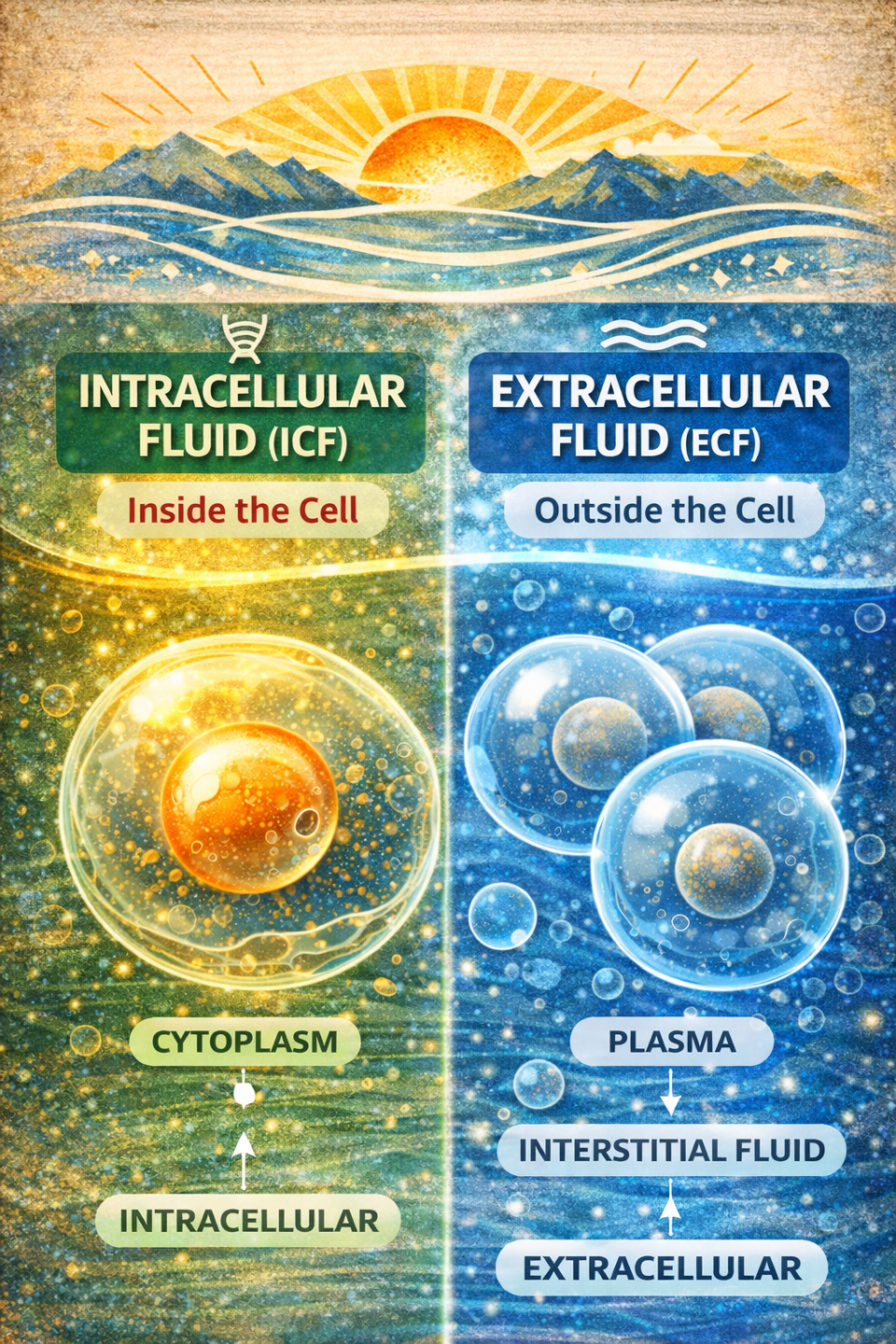
The Complete Cellular Hydration & Mineral Signaling System
The body is organized into fluid compartments
You don’t just have “water” in your body you have two major environments:
Intracellular fluid (inside cells)
This is where energy is made, nutrients are processed, and signaling happens.
Dominant minerals:
→ Potassium
→ Magnesium support
This environment allows cells to:
✔ Produce ATP
✔ Contract/relax muscles
✔ Fire nerves
✔ Maintain structure
Extracellular fluid (outside cells)
This includes blood and interstitial fluid the delivery network.
Dominant mineral:
→ Sodium
This space controls:
✔ Circulation
✔ Nutrient delivery
✔ Fluid volume
✔ Pressure balance
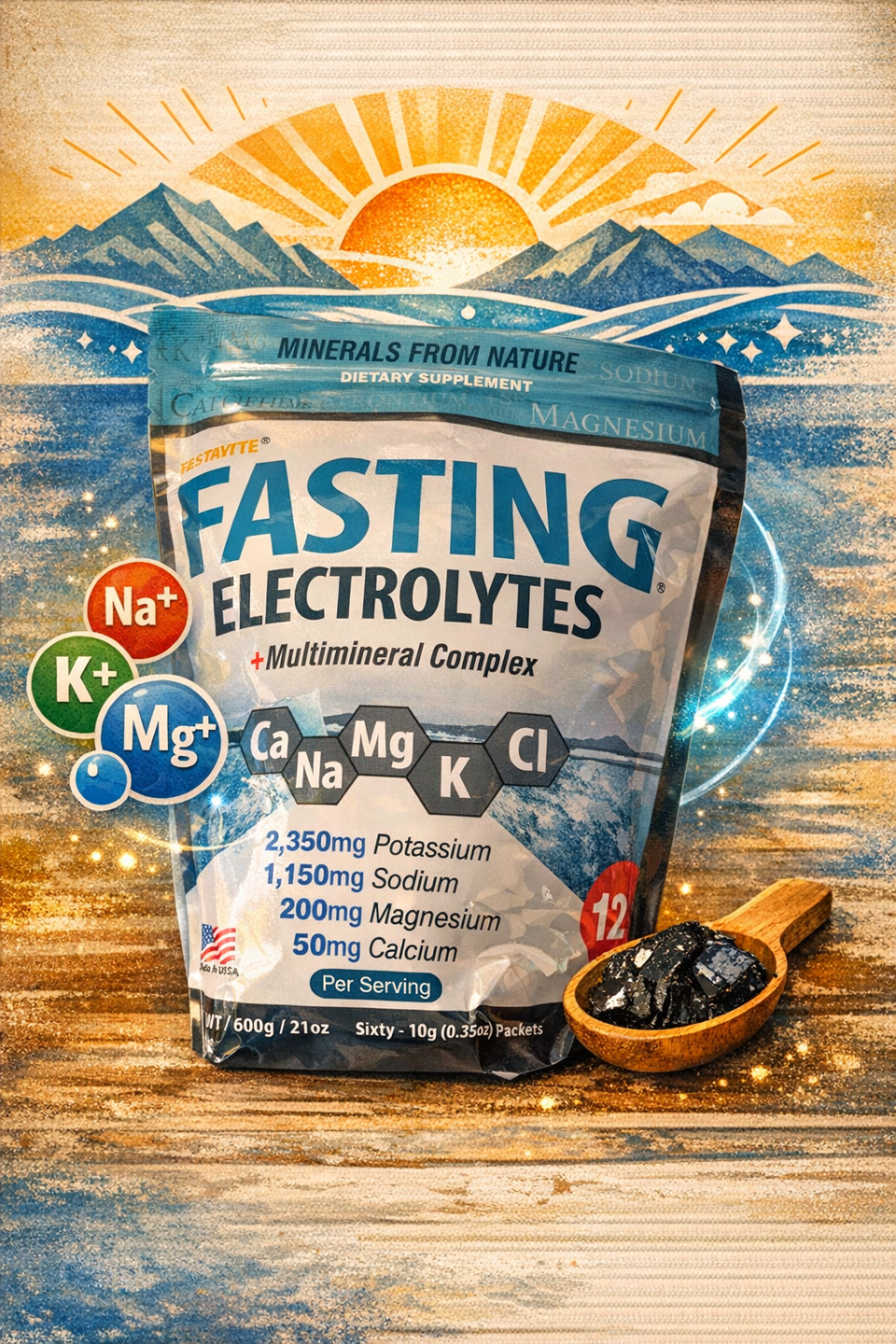
Electrolytes Cellular Hydration Drivers
Targets: Fluid balance • Nerve signaling • Muscle function • Cellular energy
Why: Electrolytes direct where water moves in the body, powering nerve communication, muscle contraction, and cellular hydration so energy, circulation, and recovery stay efficient.

Shilajit Mineral Transport & Cellular Support
Targets: Mineral delivery • Cellular energy • Nutrient uptake • Recovery
Why: Shilajit enhances mineral transport and mitochondrial efficiency, helping cells absorb what they need so hydration, signaling, and energy production function more effectively.

Hydrogen Water Cellular Energy Support
Targets: Cellular energy • Oxidative balance • Fluid efficiency • Recovery
Why: Molecular hydrogen supports mitochondrial function and cellular signaling, helping the body maintain efficient hydration, energy production, and recovery at the cellular level.
The Cellular Hydration Framework
The mineral gradient keeps cells alive
Cells function because of a constant mineral gradient:
👉 Sodium is higher outside the cell
👉 Potassium is higher inside the cell
This gradient is maintained by the sodium–potassium pump, which:
• Requires ATP (cellular energy)
• Depends on magnesium
• Relies on healthy cell membranes
This gradient determines:
✔ Where water moves
✔ Cellular hydration
✔ Electrical signaling
✔ Muscle and nerve function
When the gradient weakens, you may notice:
⚠ Fatigue
⚠ Muscle cramps
⚠ Fluid retention
⚠ Brain fog
⚠ Poor recovery
In this state, hydration becomes inefficient even if water intake is high.
Hydrogen supports the energy system behind hydration
Hydrogen does not replace electrolytes.
It supports the cellular machinery that maintains mineral balance.
Hydrogen helps:
✔ Mitochondrial ATP production
✔ Cellular redox balance
✔ Membrane signaling
✔ Stress resilience
The result:
→ Stronger sodium–potassium pumping
→ Improved fluid distribution
→ More efficient intracellular hydration
Think of hydrogen as:
The power support system behind mineral signaling.
Shilajit enhances mineral delivery and cellular uptake
Electrolytes must move efficiently across cell membranes to function.
Shilajit provides:
✔ Fulvic acid for mineral transport
✔ Trace minerals for enzyme support
✔ Membrane permeability support
This enhances:
→ Sodium and potassium utilization
→ Magnesium function
→ Cellular signaling
Think of shilajit as:
The mineral delivery and communication system.
True hydration is layered
Hydration works best when all systems align:
Layer 1 Water intake
Provides fluid volume (Read more on my recommendations below)
Layer 2 Electrolytes
Direct water movement
Layer 3 Cellular energy
Powers mineral gradients
(supported by hydrogen)
Layer 4 Mineral transport
Ensures minerals reach cells
(supported by shilajit)
When aligned:
✔ Water enters cells efficiently
✔ Fluid balance stabilizes
✔ Electrical signaling improves
✔ Energy production supports recovery
Water is the passenger.
Electrolytes are the traffic signals.
Hydrogen supports the power grid.
Shilajit maintains the delivery network.
When all four work together:
→ Cells hydrate properly
→ Energy flows efficiently
→ Stress tolerance improves
→ Recovery accelerates
What people often experience when hydration is aligned
✅ Better hydration without bloating
✅ More stable energy
✅ Fewer cramps
✅ Improved recovery
✅ Clearer thinking
✅ Balanced circulation
✅ Reduced stress fatigue
Optional morning hydration support
Some people enjoy adding lemon or lemon essential oil to morning water for flavor and digestive stimulation. This can encourage hydration habits and support a fresh start to the day though true hydration still depends on mineral balance and cellular function.
Takeaway
Hydration is not just about drinking more water.
It’s about cellular organization:
Minerals direct fluid.
Energy maintains gradients.
Transport enables uptake.
Hydrogen and shilajit don’t replace electrolytes they help the hydration system operate more efficiently.

Hydration Method Suggested
Consumption Guide
Hydration isn’t just about drinking more water.
It’s about supporting your nervous system, mineral balance, and cellular signaling so your body can actually use the fluids you take in.
Before choosing a hydration protocol…
👉 Be honest about where your body is right now.
This isn’t about labels it’s about matching support to your current capacity.
Step 1: Determine Your Starting Category
DEPLETED
(Very common especially in modern life)
Seen often with:
• Autoimmune patterns
• Thyroid stress
• Postpartum recovery
• Chronic dieting or restriction
• Long-term low-carb/keto
• High sweat output or endurance training
• Spending large amounts of time indoors with high EMF exposure
Your system isn’t broken it’s under-resourced.
Common signs:
• Low or unstable blood pressure
• Dizziness when standing
• Chronic fatigue or wired-but-tired feeling
• Poor stress tolerance
• Anxiety that improves with salt or food
• Drinking water but never feeling hydrated
• History of fasting or endurance stress
• Postpartum depletion (even years later)
• Shallow sleep or early waking
• Cold intolerance
👉 Translation: Your nervous system and mineral balance need rebuilding, not restriction.
MILDLY DEPLETED
Functional… but not optimal.
This is where many high-performing adults sit doing “fine” while running on reserve.
Common signs:
• Afternoon energy dips
• Occasional dehydration
• Mild stress sensitivity
• Slower exercise recovery
• Sleep could be deeper
• Salt cravings during heat or stress
• Perimenopause or high-workload seasons
👉 Translation: You’re maintaining hydration support improves resilience.
Step 2: Practical Hydration Protocol
“How much water should I drink?”
This is a range, not a target to force.
Hydration should support physiology not become another stressor.
Size-Based Baseline
(Based on ideal body weight)
Mildly depleted:
👉 25–35 mL per kg per day
Depleted:
👉 45–65 mL per kg per day
Think:
Steady, supportive hydration not pressure drinking.
Sip across the day. Don’t flood your system.
What counts toward your total:
✔ Mineralized water
✔ Broths
✔ Decaf/herbal tea
(add a pinch of salt to improve absorption)
These fluids help your body hold hydration, not just pass it through.
What does NOT count:
✖ Coffee
✖ Alcohol
✖ Soda
These are neutral or dehydrating inputs not hydration sources.
Coaching perspective
Hydration is not just volume.
It’s about:
→ Mineral balance
→ Nervous system safety
→ Cellular signaling
→ Recovery capacity
The goal is:
Hydration your body can actually use.
Not forcing fluids.
Not chasing arbitrary numbers.
Not ignoring body feedback.
When hydration is aligned, you’ll often notice:
✅ More stable energy
✅ Better stress tolerance
✅ Fewer dizziness episodes
✅ Improved sleep
✅ Faster recovery
✅ Less “never satisfied” thirst

Recommended Tools

Becky Niles