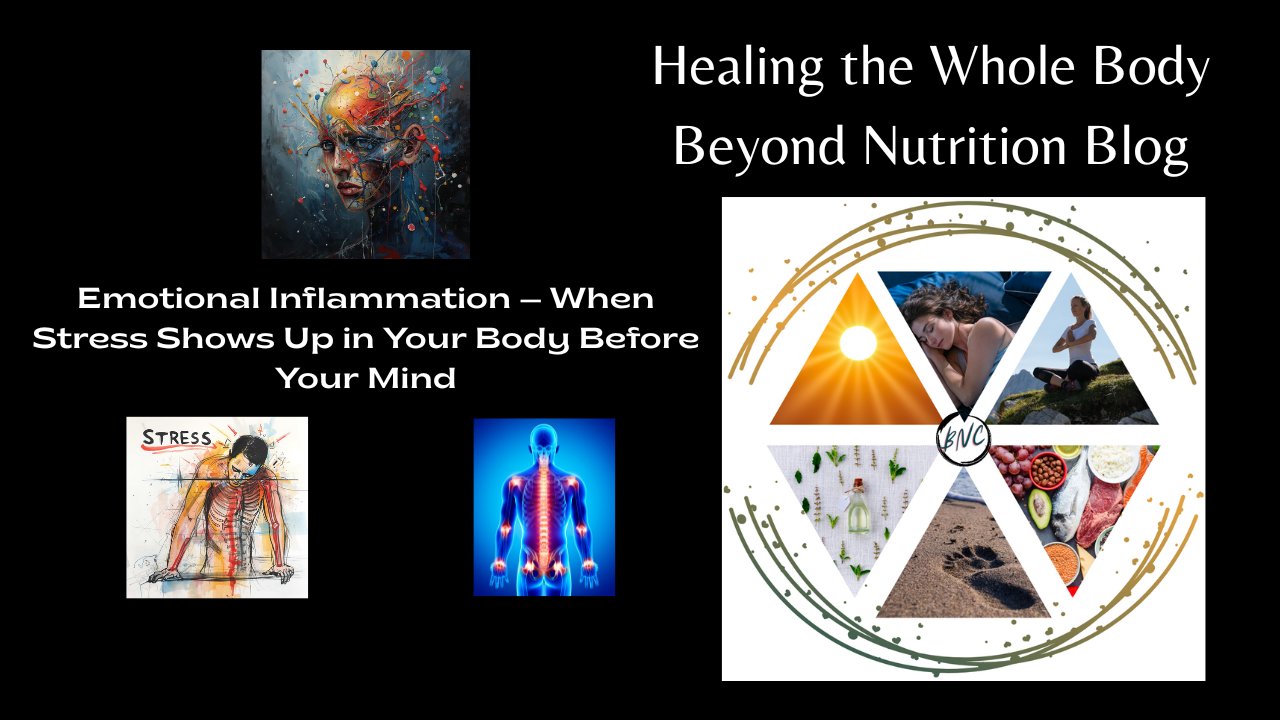
There’s a kind of heaviness that doesn’t come from food, hormones, or lack of sleep. A kind of swelling — in your chest, your breath, your mood — that feels physical but isn’t caused by anything you can measure.
This is emotional inflammation.
It’s what happens when your body absorbs more stress than it can process. Not because you’re weak. Not because you’re dramatic. But because your nervous system is carrying more than it was designed to hold.
Your body speaks the truth long before your mind catches up.
What Emotional Inflammation Really Is
Emotional inflammation is the physical expression of emotional overload. It’s the body’s way of saying: “This is too much for me to hold alone.”
It shows up when:
- You’ve been suppressing emotions to stay functional
- You’re carrying the invisible weight of responsibility
- You’re absorbing other people’s stress
- You’ve been in survival mode for too long
- You haven’t had space to process what you feel
Your body becomes the container for everything you don’t have time, energy, or safety to feel.
How Emotional Inflammation Shows Up in the Body
It’s subtle at first — then unmistakable.
- Feeling puffy or swollen without dietary changes
- Tightness in your chest or throat
- Digestive slowdowns
- Muscle tension that won’t release
- A heavy, dragging fatigue
- Brain fog or mental “thickness”
- A sense of being overstimulated by everything
These symptoms aren’t random. They’re your body trying to metabolize emotional load.
Why Emotional Stress Feels Physical
Your nervous system doesn’t separate “emotional” from “physical.”
To your body:
- A hard conversation
- A stressful job
- A relationship conflict
- A financial worry
- A childhood trigger
- A lack of support
…all register as physiological threat.
Your body responds with inflammation‑like symptoms because it’s trying to protect you.
This is not in your head. It’s in your body — because your body is where stress lives.
What Your Body Is Trying to Tell You
Emotional inflammation is communication.
Your body is saying:
- “I need slower mornings.”
- “I need fewer demands.”
- “I need grounding, not stimulation.”
- “I need warmth, not pressure.”
- “I need to feel safe, not rushed.”
Your symptoms are not failures. They’re signals.
How to Begin Releasing Emotional Inflammation
You don’t fix emotional inflammation with force. You soothe it by supporting your body’s natural rhythms — especially your circadian rhythm.
1. Sunrise Light
Sunrise light is the most powerful way to anchor your circadian rhythm.
- Avoid turning on lights
- Don’t look at your phone
- Step outside and face the early morning sky
- Let the natural sunrise light reach your eyes
This gentle exposure signals safety to your nervous system, stabilizes cortisol for the rest of the day, and reduces emotional reactivity.
2. Eat Your First Protein‑Forward Meal Within 30 Minutes to an Hour Upon Waking
Stable blood sugar = stable mood.
Examples:
- Eggs in butter with bacon or sausage
- Chicken thigh with roasted root vegetables
- Ground beef with a baked potato
- Salmon with butternut squash
Protein early anchors your circadian rhythm and calms inflammation signals.
3. Anchor Your Afternoon Energy Dip
Your body naturally slows between 1–3 p.m. Instead of fighting it, support it.
- Step outside for 2 minutes of sunlight
- Take 5 slow breaths
- Do a 30‑second stretch
- Drink water with electrolytes
This prevents the emotional “crash” that often feels like inflammation.
4. Dim Lights at Sunset
Your circadian rhythm needs darkness to produce melatonin.
- Turn off overhead lights
- Use red lamps or red bulbs
- Avoid bright screens when possible – in fact, turn it off
Darkness signals safety and reduces nighttime emotional swelling.
5. Warm Your Body Before Bed
A warm body helps your core temperature drop — a key circadian cue.
- Warm shower
- Heating pad
- Warm socks
- Holding a warm mug of herbal tea
Warmth tells your nervous system, “You can soften now.”
6. Ground Outside During Transitions
Circadian rhythm thrives on environmental cues.
- Stand barefoot on the ground
- Sit on the porch and feel the air
- Touch a tree
- Walk slowly and notice the sounds
Grounding reduces emotional load and stabilizes your internal clock.
7. Keep a Consistent Wake Time
This is the foundation of circadian regulation.
You don’t need a perfect bedtime — just a consistent wake time. Your body will naturally adjust the rest.
A Final Thought
Emotional inflammation isn’t a flaw. It’s a message.
Your body isn’t betraying you — it’s protecting you. It’s holding what you haven’t had the space to feel.
When you listen to those signals with gentleness, your body softens. Your energy returns. Your clarity comes back. Your emotions move again.
This is how healing begins — not with pressure, but with presence.
-- Coach Sherri
Join the BNC Community
Ready to take your healing journey to the next level? Join the Beyond Nutrition Community (BNC) for personalized support, expert guidance, and a network of like-minded individuals dedicated to holistic wellness. Visit Beyond Nutrition Community to get started today!
Stay connected with news and updates!
Join our mailing list to receive the latest news and updates from our team.
Don't worry, your information will not be shared.
We hate SPAM. We will never sell your information, for any reason.
