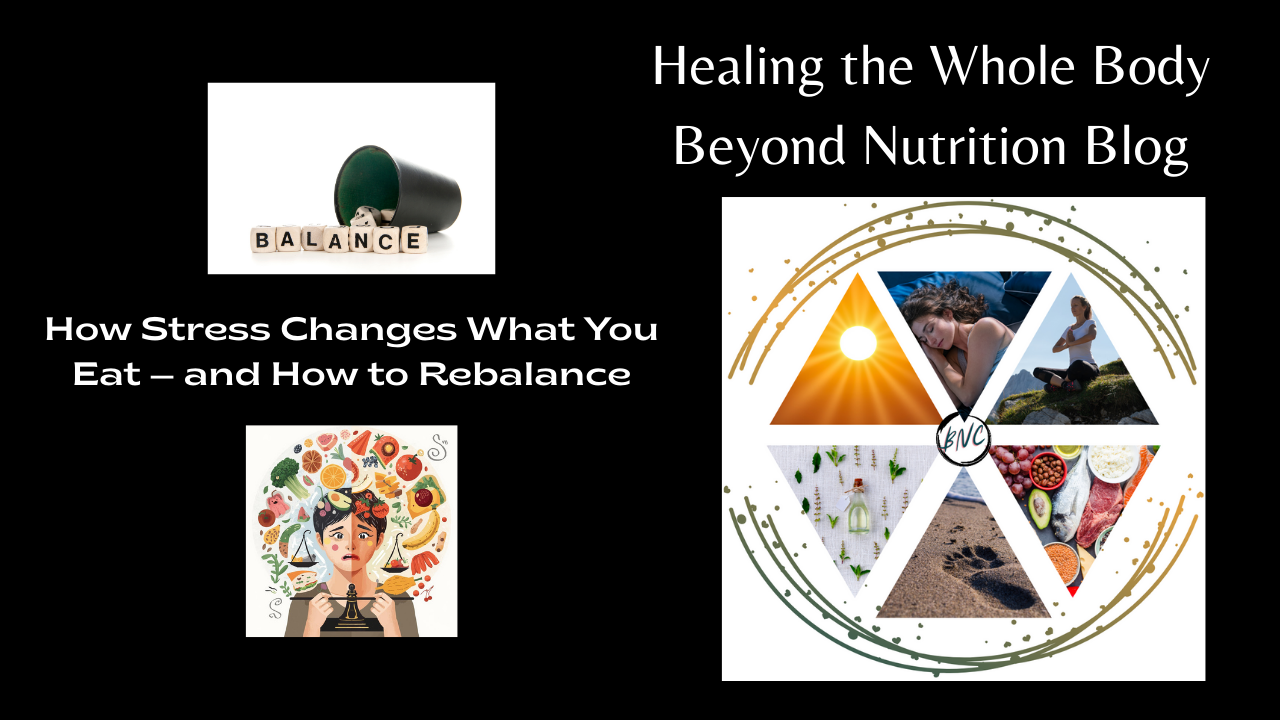
There’s a reason your eating habits shift when life gets heavy. It’s not lack of willpower. It’s not “bad choices.” It’s not you being undisciplined. It’s your nervous system doing exactly what it was designed to do.
When you’re under pressure — especially the chronic, invisible kind that comes with high‑stress roles — your biology changes. Hunger cues shift. Cravings intensify. Digestion slows. Your body starts reaching for foods that feel grounding, comforting, or energizing.
This is trauma‑informed nutrition: understanding how your lived experiences, stress load, and nervous system state shape the way you eat. And once you understand the why, everything becomes gentler.
Why Stress Changes Your Eating Patterns
Your body doesn’t separate emotional stress from physical threat. To your nervous system, a tense meeting, a courtroom conflict, or a difficult conversation can feel as activating as danger.
So your biology responds: cortisol rises, digestion slows, hunger cues become unreliable, blood sugar swings, and comfort foods feel safer. None of this is a failure. It’s physiology. Your body is trying to protect you.
The Three Eating States of a Dysregulated Nervous System
Fight‑or‑Flight Eating: You feel rushed, wired, craving quick energy. You reach for sugar, caffeine, salty snacks, anything fast. Your body is saying: “I need fuel to survive this moment.”
Freeze‑State Eating: You feel numb, disconnected, exhausted. You reach for comfort foods, heavy meals, emotional eating patterns. Your body is saying: “I need grounding. I need safety.”
Regulated Eating: You feel steady, present, able to notice hunger and fullness. You reach for balanced meals, slower eating, foods that nourish. Your body is saying: “We’re safe enough to digest.”
The goal isn’t perfection. It’s awareness.
How to Rebalance with Trauma‑Informed Nutrition
These aren’t diet rules. They’re gentle invitations to support your biology.
Start with Safety, Not Restriction: Your body digests better when it feels safe. A single slow exhale before eating can shift your entire meal experience.
Add, Don’t Remove: Instead of cutting foods out, add stabilizers like protein, fiber, healthy fats, and minerals. These help regulate blood sugar and calm the nervous system.
Eat in Micro‑Moments of Regulation: Even 20 seconds of grounding before a meal helps your body shift from survival mode to digestion mode.
Honor Your Cravings with Curiosity: Cravings are communication. Ask: “What is my body trying to feel right now — energy, comfort, grounding, relief?”
Build “Safety Plates”: Meals that feel soothing and stabilizing — warm foods, easy‑to‑digest proteins, slow carbs, grounding spices, mineral‑rich broths.
Why This Matters for Your Healing and Your Health
When you understand the connection between stress and eating, you stop fighting your body and start partnering with it. You begin to see patterns instead of problems. Signals instead of shame. Needs instead of “bad habits.”
Trauma‑informed nutrition isn’t about eating perfectly. It’s about eating with awareness, compassion, and nervous‑system support. And when your body feels safe, everything else becomes easier — digestion, energy, mood, clarity, and your relationship with food itself.
-- Coach Sherri
Join the BNC Community
Ready to take your healing journey to the next level? Join the Beyond Nutrition Community (BNC) for personalized support, expert guidance, and a network of like-minded individuals dedicated to holistic wellness. Visit Beyond Nutrition Community to get started today!
Stay connected with news and updates!
Join our mailing list to receive the latest news and updates from our team.
Don't worry, your information will not be shared.
We hate SPAM. We will never sell your information, for any reason.
